
Uncategorized
Tomatoes
Jul
I’m astonished by how many times I hear keen tomato growers say “What a terrible season it has been for tomatoes.”
I try to explain that more than likely it isn’t the season at fault but the variety of tomato that they are planting.
Let me explain.
There are over thirty and counting serious diseases of tomatoes. Modern seed houses spend a lot of time and treasure breeding tomatoes which are resistant to at least the worst of those diseases. This work is painstaking and expensive. I know what the purveyors of “heirloom” seeds say about modern varieties, that they have no flavour. They then go on to compare the few ripe heirloom varieties that they have managed to grow, with the cheaper supermarket tomatoes, most of which have been picked unripe, often green, shipped across the continent in refrigerated trucks and ripened artificially. It’s hardly surprising that the “heirloom” tomatoes taste better. But to taste better you must first have a crop to taste, and ‘heirloom” varieties are so prone to succumbing to one or more diseases before they have ripened a decent crop that they are hardly worth the bother.
A confession. I was beguiled by the “heirloom” fairy tale when I first started growing vegetables here in the Lambley garden. I make my own passata so I planted two quite long rows of ‘heirloom” Roma tomatoes. Rowed out in mid-November from seed sown in July they flourished until just before the first fruit ripened and then, one after another, they wilted and died, martyrs to Tomato Spotted Wilt Virus. Nothing daunted and paying no heed to the phrase wrongly attributed to Einstein “The definition of insanity is doing the same thing over and over gain and expecting different results” I planted the same “heirloom’ tomatoes for two more years with of course the same result.
And I was supposed to know what I was doing.
Finally coming to my senses, I worked out that the problem was not my poor growing skills but the “heirloom” seed strains I was attempting to grow.
From then on, I decided to sow modern, blight-resistant tomato varieties and sought out those that not only had a good disease resistance, but also excellent flavour.
All modern tomato seed strains are F1 hybrids. For two reasons. These strains have hybrid vigour and also enable the breeder to combine the best of both parents. The second and main reason, I suspect, is that by selling F1 hybrid seed, the enormous investment that seed companies make in breeding tomatoes is protected.
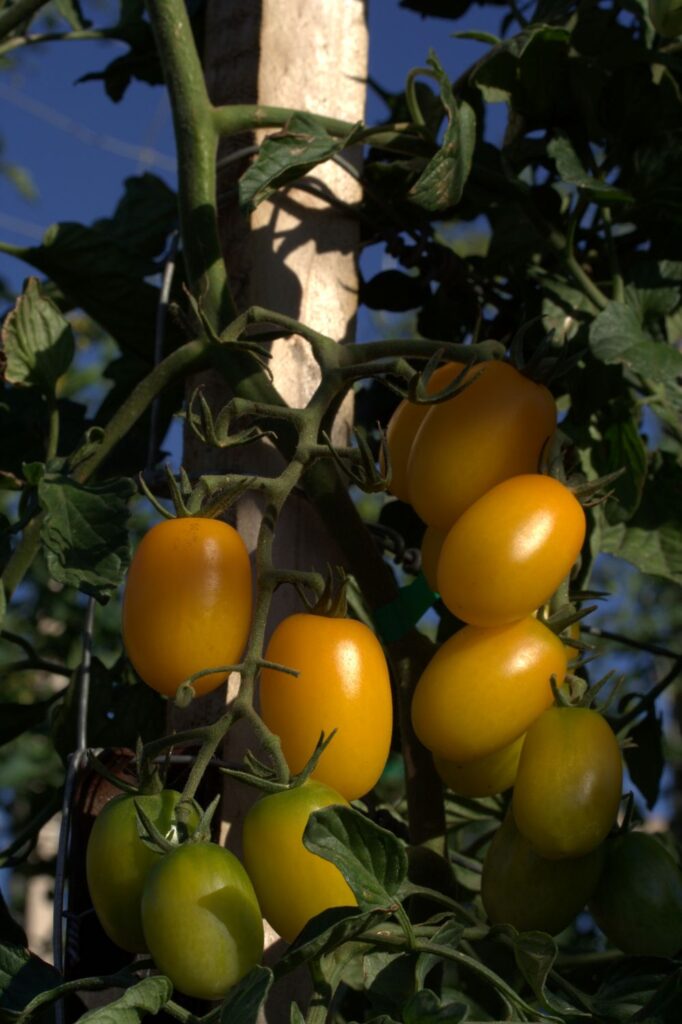
F1 hybrid seeds are not genetically modified although this is so often implied by purveyors of “heirloom” seeds. F1 hybrids are in fact crosses between two tomato strains, nothing more. The two strains are grown side by side and hand pollinated.
The same purveyors will often say that the giant chemical companies control 80% or 90%, or some other figure picked out of thin air, of the world’s seeds. This may be true of soy beans, maize, canola and other agricultural crops but certainly isn’t true for vegetable seeds. The biggest producer of vegetable seed in the western world is a French farmer’s cooperative, Limagrain. This company was formed soon after World War Two to produce and supply quality seeds for French vegetable growers.
The price of modern tomato seed is of course much greater than so called heirloom seed. A case in point, “heirloom” Roma seeds are less than one 15th the price a good modern Roma seed. With the former a decent crop is unlikely, with the latter, a decent crop, given reasonable growing conditions, is a certainty.
Click here to peruse our range of tomato seeds – all F1 Hybrids.