Uncategorized
March at Lambley
Mar
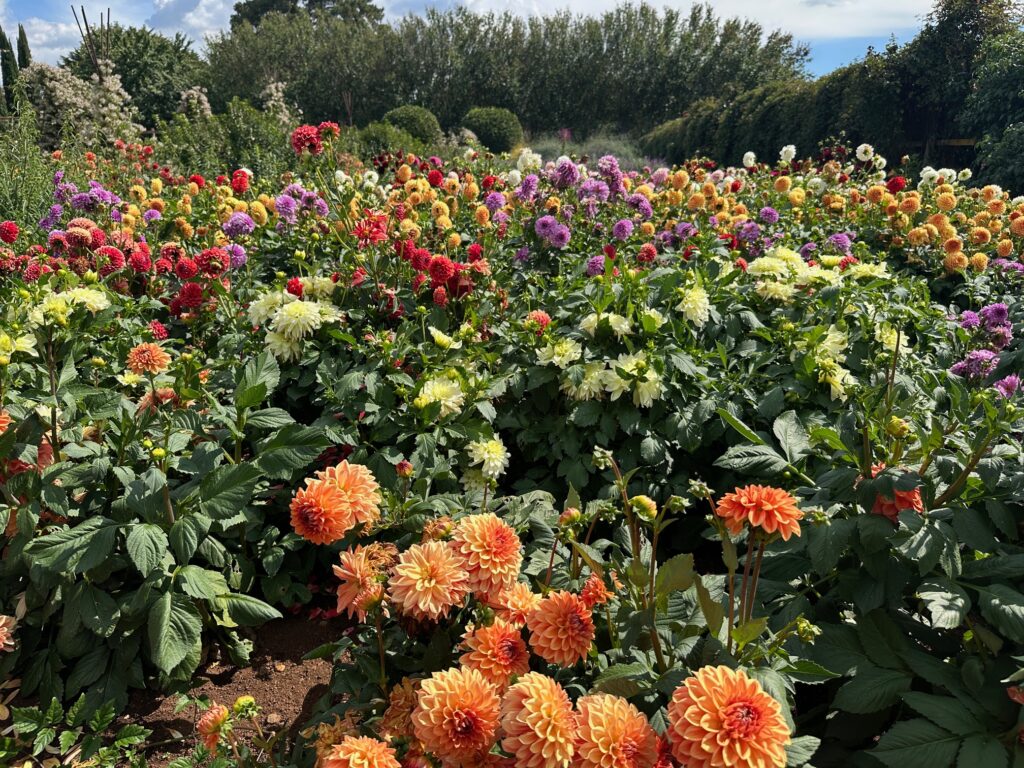
The Dahlia beds at Lambley.
Where to start. The garden here at Lambley is looking as beautiful as it has ever looked. The ‘Honorine Jobert’ Japanese windflowers are at their heart-stopping best. Hundreds, if not thousands of single white flowers, swaying with every breath of wind on 120cm tall wiry stems. Last year a ninety-year-old customer, gazing at this garden, turned to me and said, “It looks like the gateway to heaven Mr Glenn.”
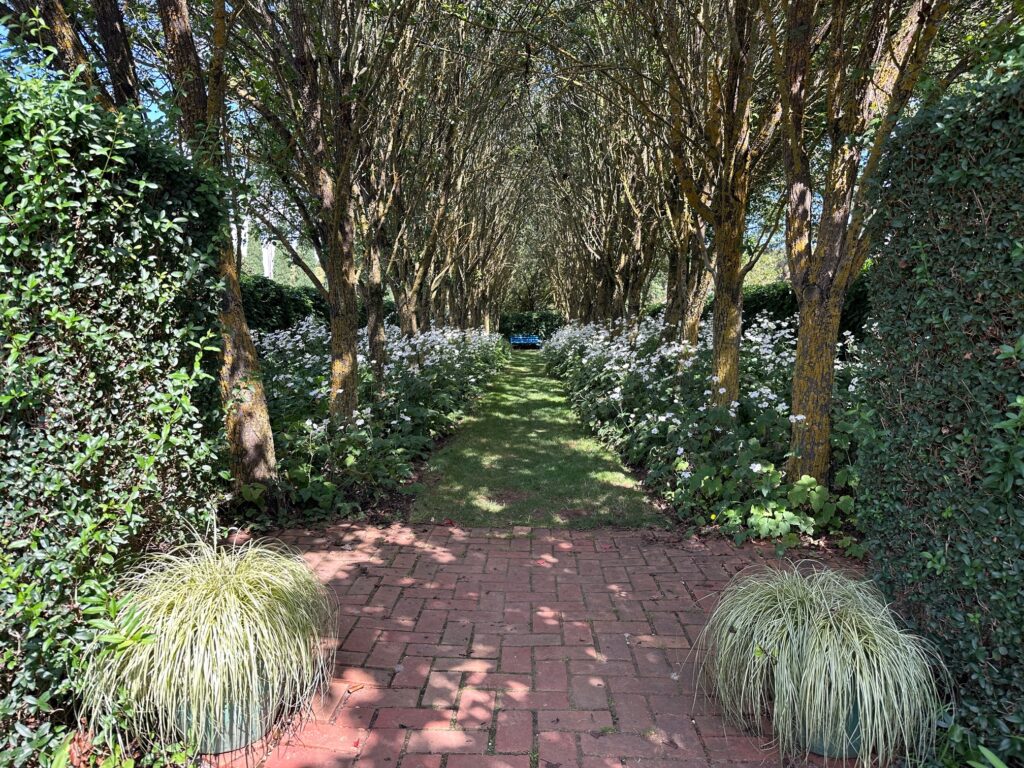
The Pear Walk, with ‘Honorine Jobert’ Japanese windflowers are at their heart-stopping best.
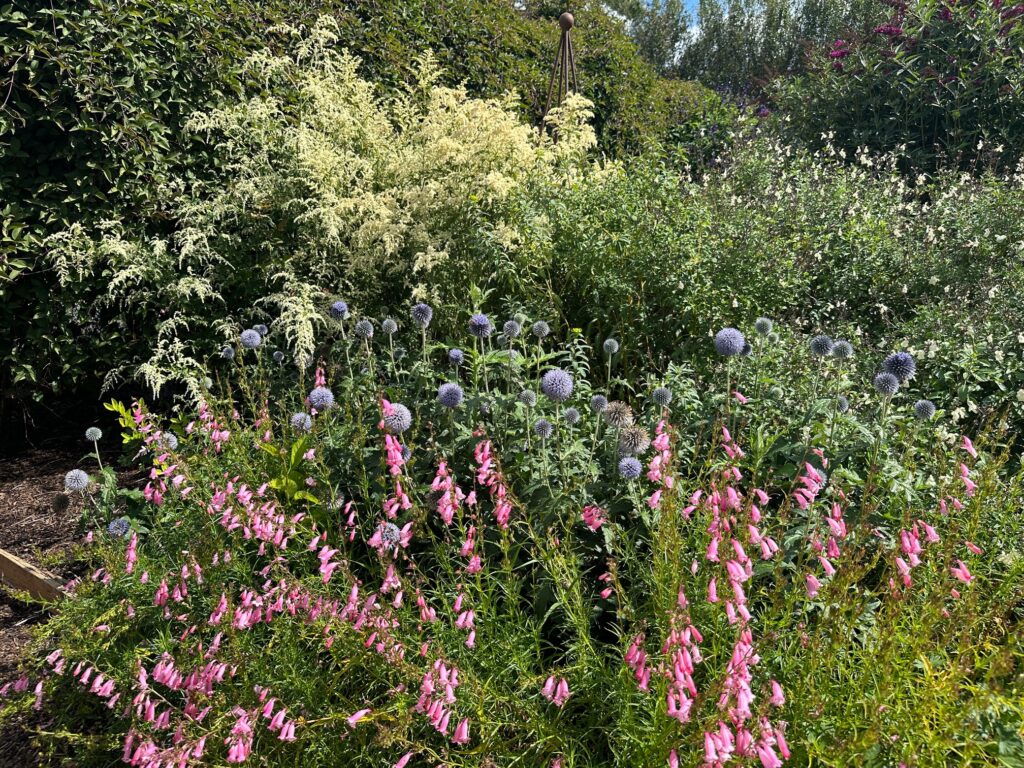
Penstemon ‘Evelyn’, Echinops ‘Blue Haze’, with the milky white flowers of Artemisia lactiflora behind.
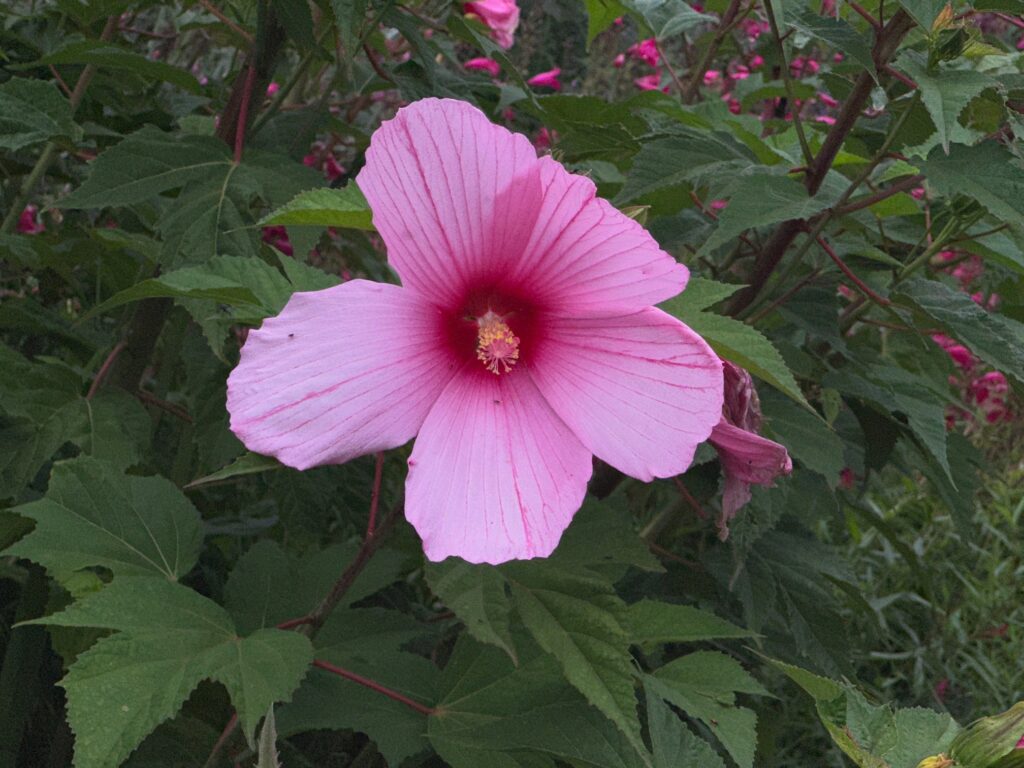
Frost hardy Hibiscus.
The flower border is looking is looking particularly telling too. I especially love the Penstemon ‘Evelyn’ bouncing off Echinops ‘Blue Haze’ with the milky white flowers of Artemisia lactiflora behind. Penstemon ‘Evelyn’ was raised at Sissinghurst Castle Gardens and named by the owner, Vita Sackville-West, for one of her many lovers, Evelyn Irons. It’s a superb plant which produces its long tubed, clear pink flowers from November until well into April, if dead headed. Smaller growing, at 40cm tall, with much finer foliage than other varieties, it is far and away my favourite Penstemon.
The Artemisia, a very handsome plant, is grown for the excellence of its flowers whilst most other garden Artemisia such as the wormwoods are grown for their silver foliage. A. lactiflora produces 150cm or so tall, dark green leafy stems the top third of which are many arching sprays of milky white flowers.
Further along the border is a terrific frost hardy Hibiscus. I take it to be a form of the herbaceous Hibiscus moscheutos, the rose mallow, which is a native of wet areas in eastern north America from Texas to Ontario. The form I grow was raised during the 1950s by the late Dennis Norgate who in his Bayswater and Trentham nurseries grew perennial stock in the open field and sold the plants bare rooted. Norgate told me that he stopped growing this Hibiscus in the 1960s because the root system was too big to send by mail. My plant came from a local farmer who got cuttings of the plant from the Deniliquin bowling club gardens in the 1970s. When we moved Lambley from the Dandenongs to Ascot 35 years ago, the farmer gave me a piece. It is a star of the garden at this time of year, growing nearly two metres tall and carrying, for many months, a display of 18cm wide pink flowers with a deeper throat. We do give it extra water as the flowers abort if the plant gets dry.
I love morning glory. When I first arrived in Melbourne, on my 21st birthday 62 years ago, morning glory covered all the back fences of the then working-class suburbs of Richmond, Fitzroy and Collingwood. Viewed from a passing train it was breathtakingly beautiful. I know it’s a weed in many parts of the country but I still grow it every year because it is obligingly frost tender so not likely to get away here.
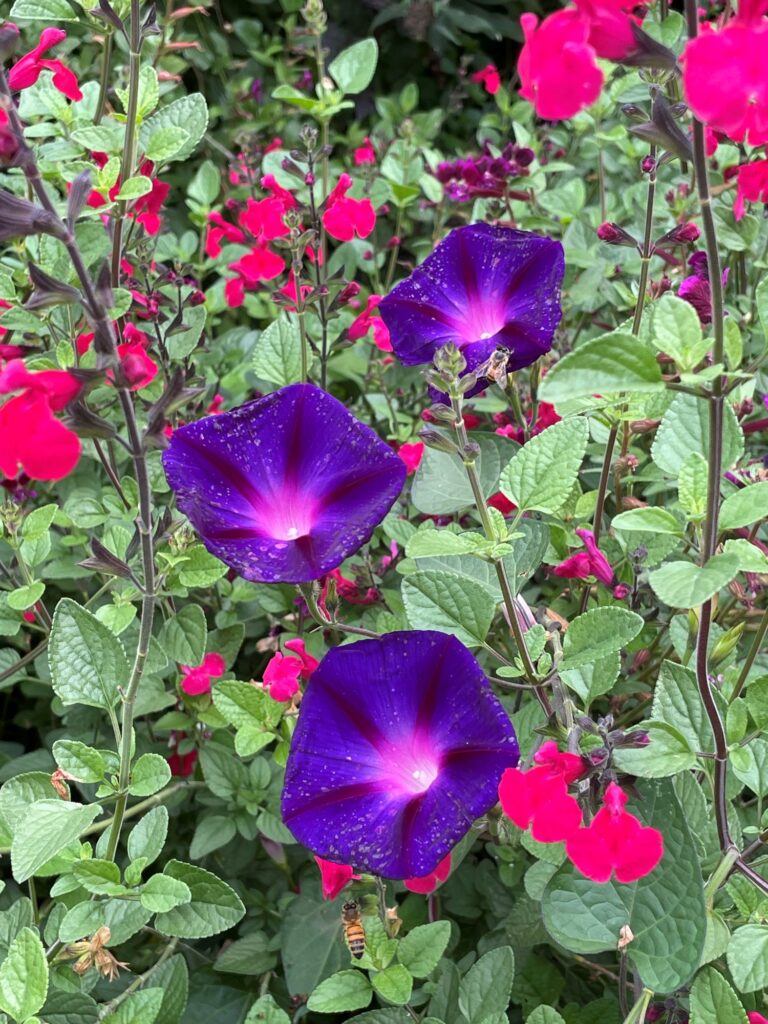
I share my love of morning glory with the 18th century Japanese poet Fukuda Chiyo-ni who perfected the art of Haiku.
the morning glory!
it has taken the well bucket,
I must seek elsewhere for water
A different and my favourite translation which I can only quote from memory goes –
the morning glory!
has captured my well bucket,
I shall beg water
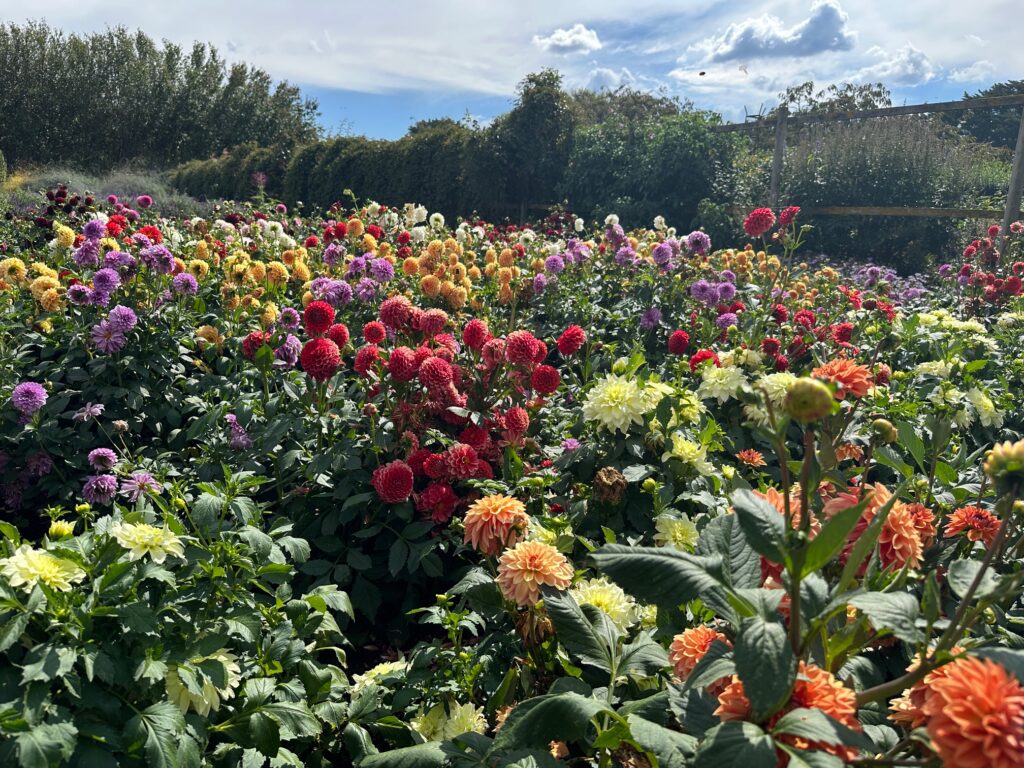
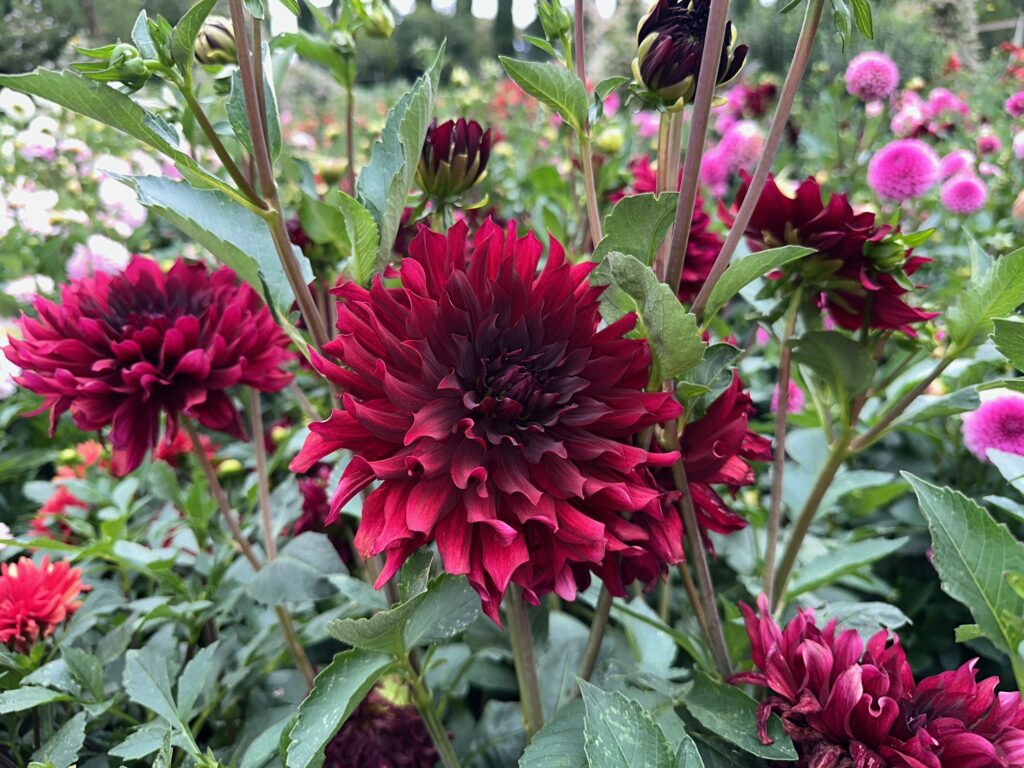
Also from Japan are the Dahlias bred in Kyoto for the cut flower trade. Not only are they great in a vase with their long lasting blooms on extra long, extra strong stems, but they are brilliant in the garden. As each flower lasts at least twice as long as traditional varieties they make a marvelous show.
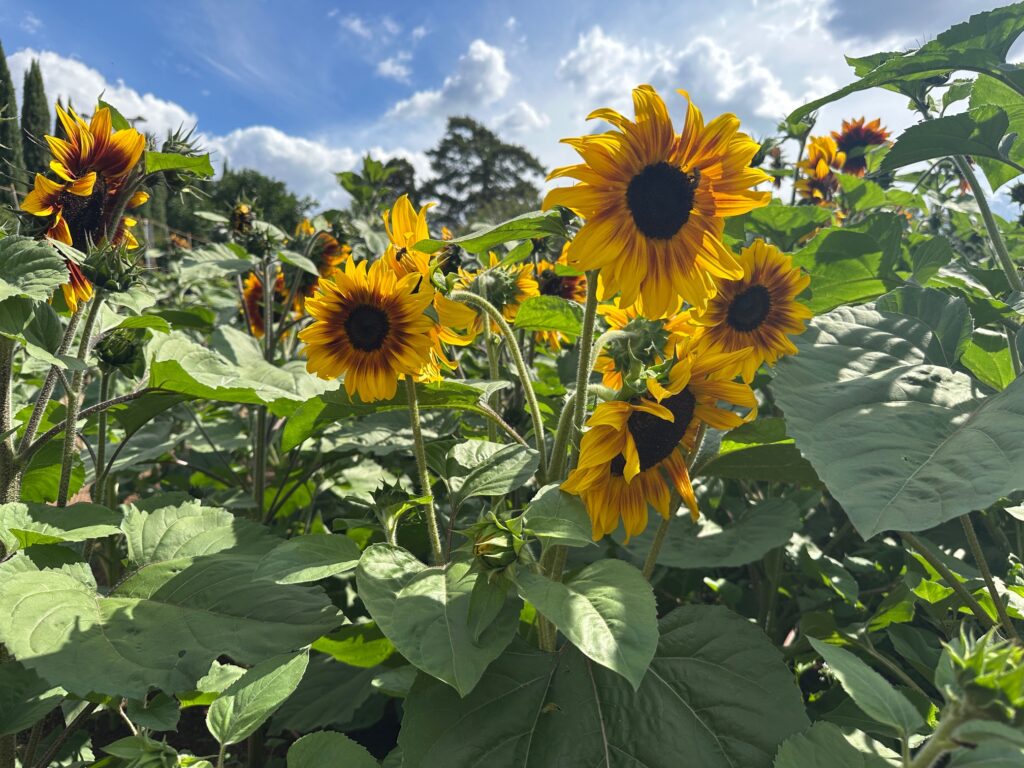
And to finish this quick tour we sowed eight or so different strains of sunflowers in January and they are now coming into full glory.