
Uncategorized
Delight in the Winter Garden
Aug
Walking around the garden today in the winter sunshine was such a joy.
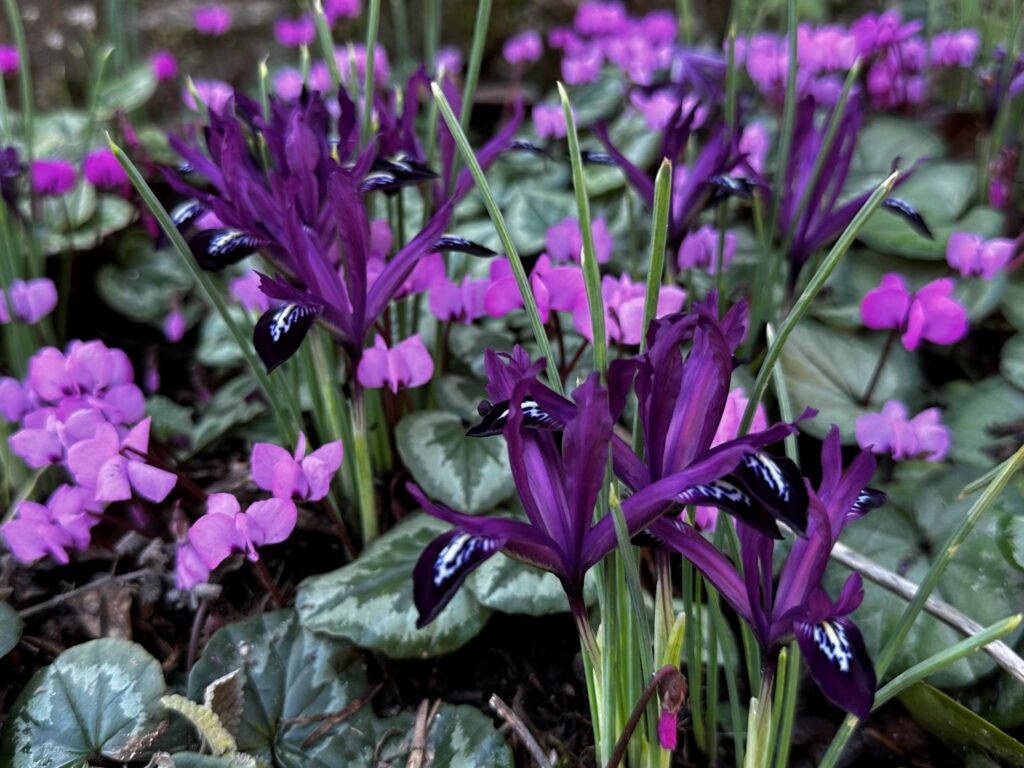
As I write, in the first week of August, the Iris reticulatas are in full flight. We grow half a dozen different clones the names of which are hiding somewhere in my aged brain. The most charming group of this Iris is flowering next to a Cyclamen coum. This cyclamen is a winter stalwart. The first of its buds open late June and it will still be flowering well into September. This native of coastal hills and mountains around the Black Sea grows wild in quite moist spots. However, with us, it is as happy in very dry parts of the garden as well as irrigated parts. We mostly have ones with silver patterning on the leaves although I do like the plain dark green-leaved forms better. C. coum’s leaves appear in autumn and are fully developed by flowering time. The rather dumpy flowers are freely produced and it isn’t uncommon for one plant to have fifty or more flowers open at a time, ranging in colour from white to soft pink to deeper pink to magenta.
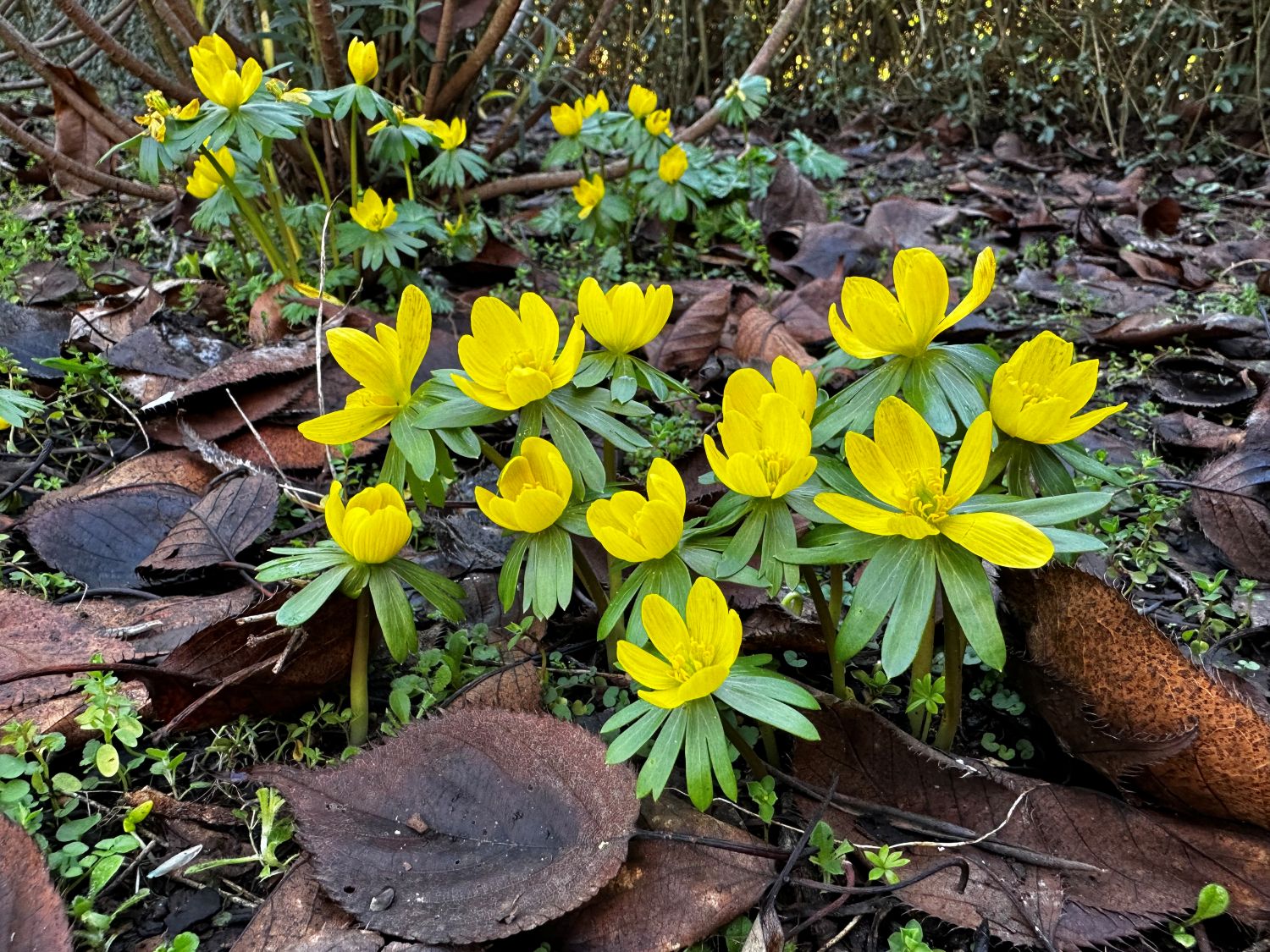
Always a joy, the winter aconite, Eranthus cilicica, has almost run its race for this year being at its best in July. It is at its most beautiful when its flowers first push through the earth. The unopened globular flowers, with their ruff of much dissected dark green leaves, have a look all of their own. Later, especially on sunny days, the flowers open wide and look like diminutive buttercups. I did once, many decades ago, try to grow Eranthis hyemalis, which is much more common than C. cilicica in northern European gardens, without any luck.
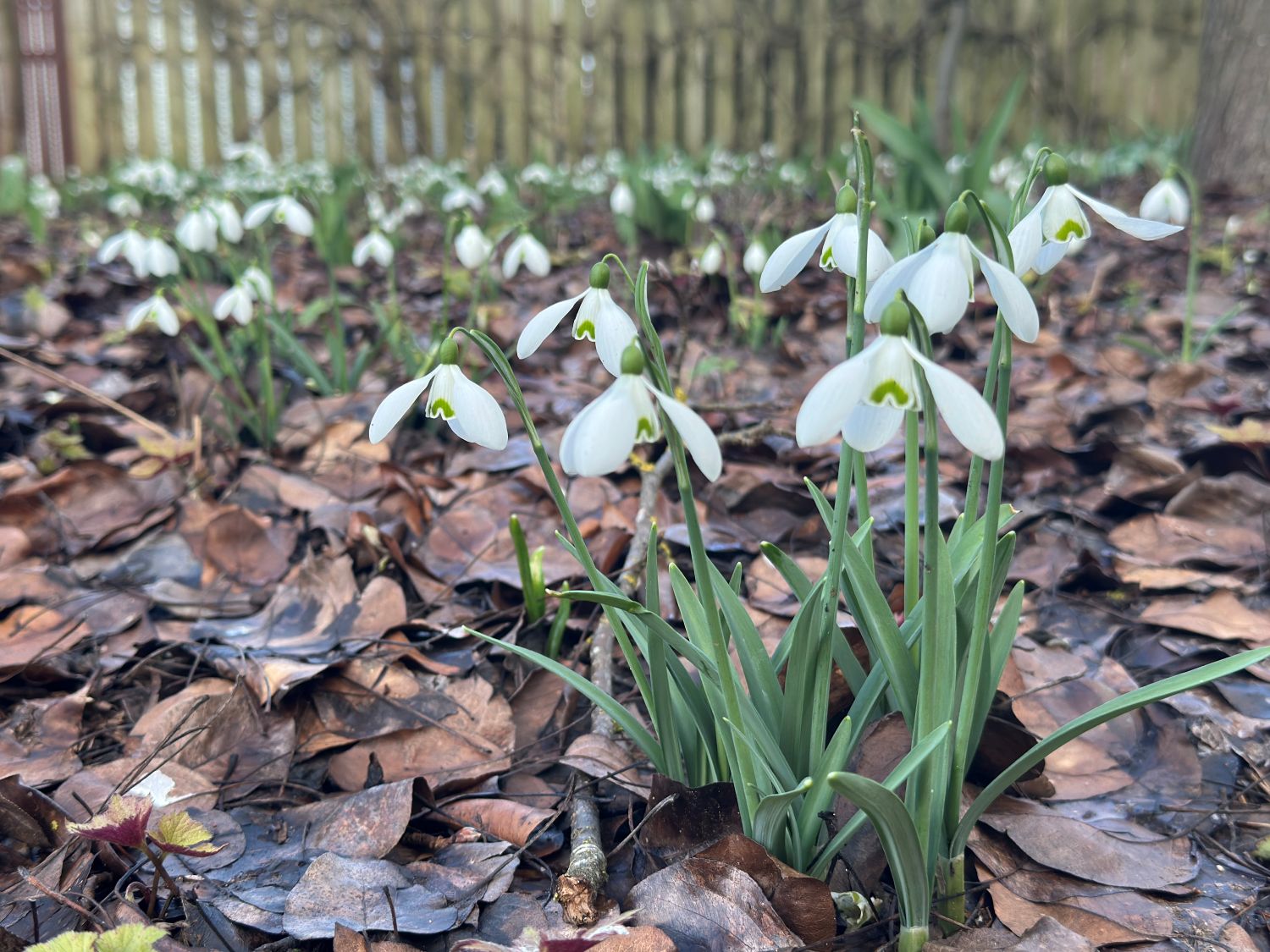
One part of the garden which pleases me no end is a small copse of Pyrus ‘Edgewood’. Ten years ago we underplanted the trees with the single deep pink Japanese windflower, Anemone x hybrida ‘Hadspen Abundnace’, which puts on a splendid display during mid-summer and autumn. As it is cut to ground level in late autumn, leaving the area bare for many months, three years ago we collected from different spots in the garden all the bulbs of that most wonderful snowdrop, Galanthus nivalis ‘S. Arnott’. It was a gamble as we didn’t know how well it would compete with the windflower. The gamble paid off and I can’t begin to tell you how much delight this little copse gave me today. The snowdrops are well and truly settled in and have increased in numbers quite substantially.