
Uncategorized
Chrysanthemums
May
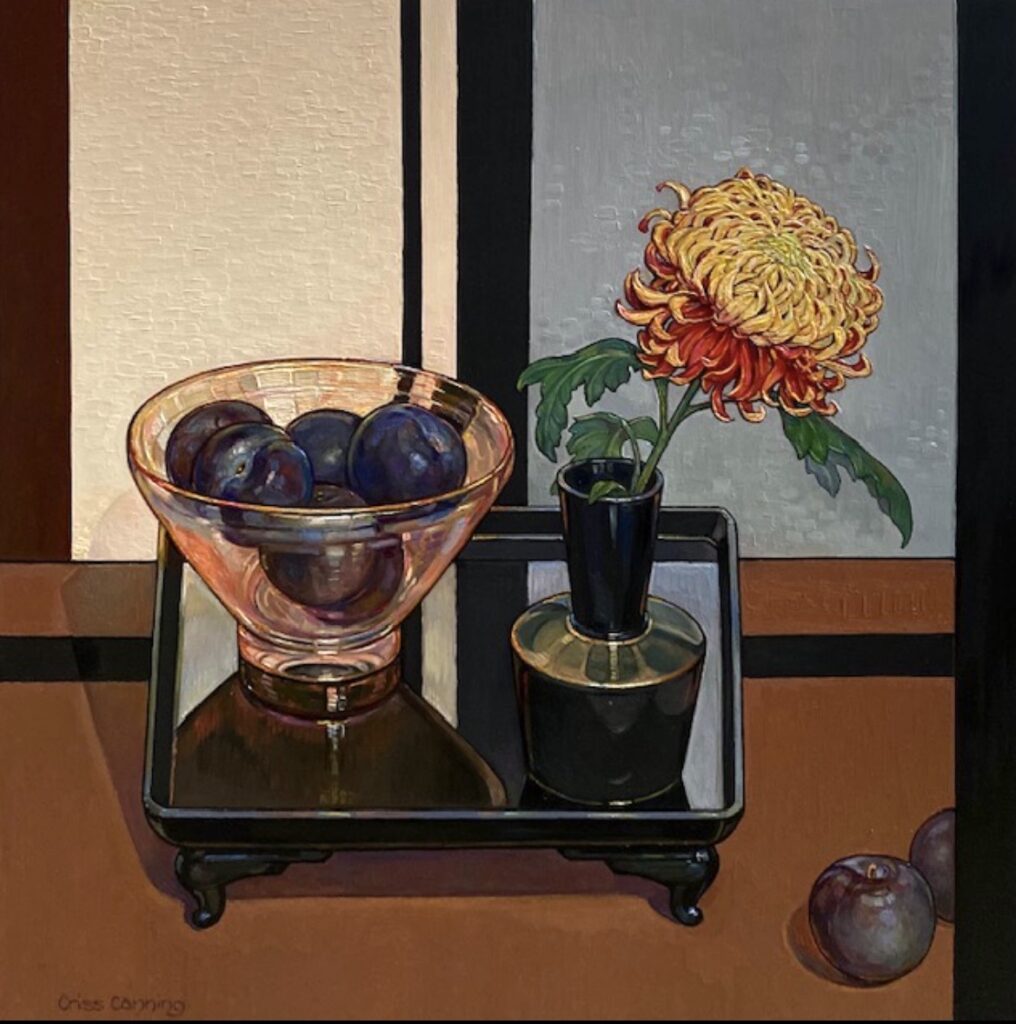
Criss Canning – Still Life – Autumn
Oh my goodness how time flies. It was more than seventy years ago – I was twelve years old – when first I worked with Chrysanthemums. I was employed by my uncle Cyril on his nursery in the main street of Lambley in Nottinghamshire during school holidays and Saturday mornings. My uncle had several glasshouses which he made sure were productive the year round. During summer, whilst the houses were filled with the tomato crop, the Chrysanthemums were grown outside, potted into whale-hide pots. They were not made of whale hide of course but a double layer of thick paper enclosing of tar-like substance. One of my jobs was to fill the pots with water every Saturday. When frost threatened and the tomatoes were no longer producing a decent crop the Chrysanthemums were taken into the green houses. Each plant had 9 strong growths and were disbuds. All side shoots were removed by my uncle leaving a single large flower at the top of each stem. Every greenhouse contained one variety only and when in flower, during November and December, I thought that there could hardly be anything more beautiful than the serried ranks of perfectly grown plants all blooming at the same time.
I went to both primary and secondary school with my cousin, Jack – now Dr John Glenn, a distinguished architect and landscape architect. His father, my uncle, was in charge of parks and gardens for a local municipal council. In the mid-1950s he was a judge of the Northern England group of the National Chrysanthemum Society and was paid five guineas for his trouble. Five guineas was half a working man’s weekly wage at the time. One day I called at Cousin Jack’s house and found my Uncle Charlie sitting at his kitchen table, small blunt tweezers in hand, ever so gently putting an errant petal of a disbud Chrysanthemum in its place so that the bloom looked perfect. Not only was he a judge, but he also entered his ‘chrysants’, as we called them, into the competitive section of the shows. At the time I was open-mouthed at the sight of a grown man carefully ‘playing’ with flowers like that.
Fifteen years later, I worked at Paramount Nursey in Glen Waverley, an eastern suburb of Melbourne. Ron Gross, the owner, a tough, hard-but-fair man, had built a huge glasshouse where he grew Chrysanthemums in pots. He flowered them the year round, marketing them as Potted Sunshine.
Chrysanthemum make vegetative growth as the days grow longer during spring and early summer. Flowering is triggered when the days get shorter during late summer and autumn. At Paramount Nursery during the short days of the year artificial lighting allowed the plants to make vegetative growth. Chemical growth retardants shortened stem length to make more compact plants. When flowers were needed the lights were turned off. During long days when flowering was required, the benches were covered with black cloth to mimic short days.
If these Potted Sunshine Chrysanthemums were later planted in a garden, they would grow very tall, up to 150cm. It was the chemical dwarfing agent that kept them compact. Nowadays plant breeders have worked their magic, and you can find beautiful, naturally small growing Chrysanthemums like the ones trooping their colours in the Lambley garden this week. If well-grown they will produce hundreds of flowers on domes some 30cm tall and 60cm diameter.
I’m about to retire, and one of my retirement projects is to grow those glorious disbud Chrysanthemums such as the one appearing in my wife Criss Canning’s painting.
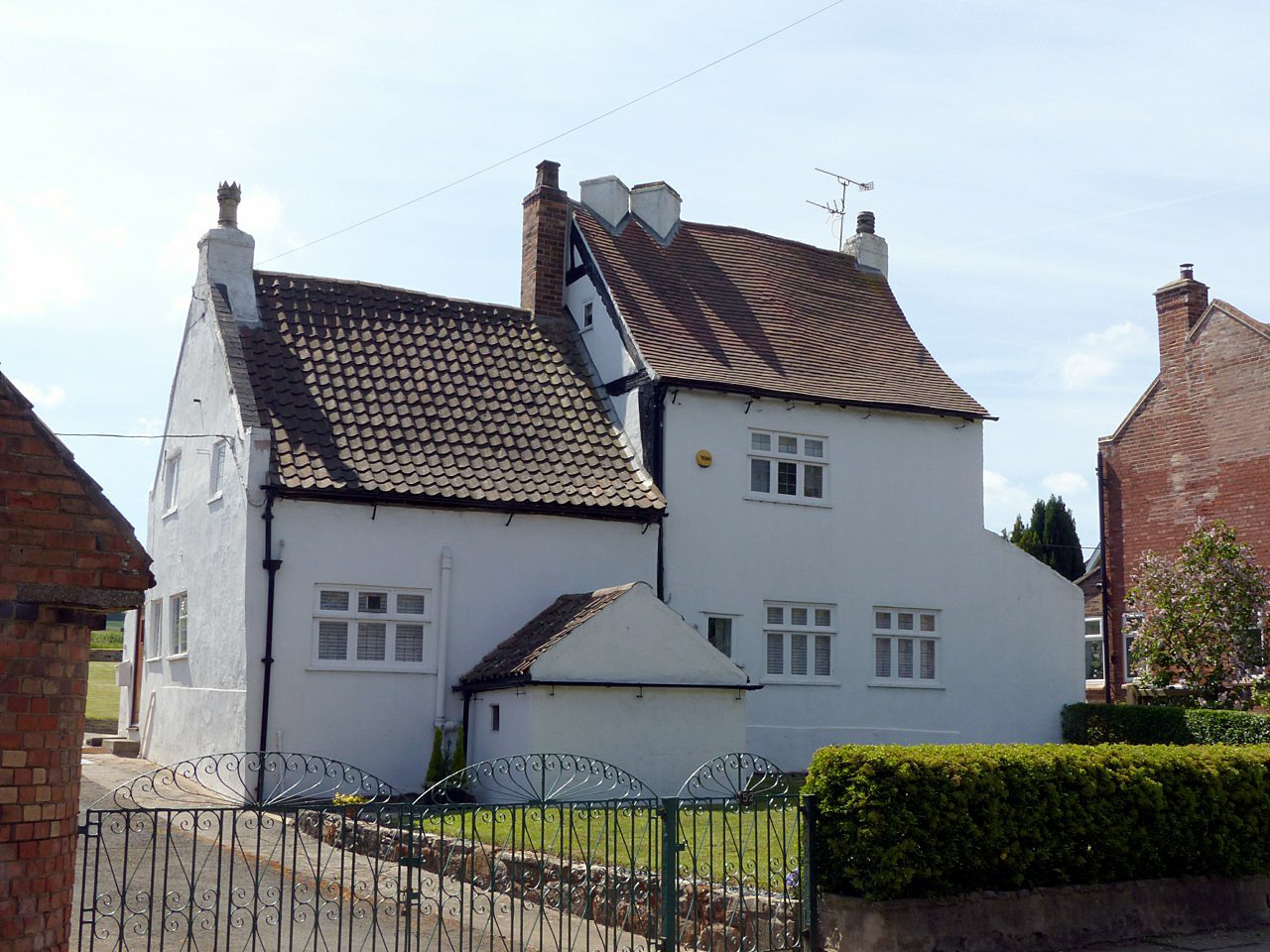
52 Main Street, Lambley
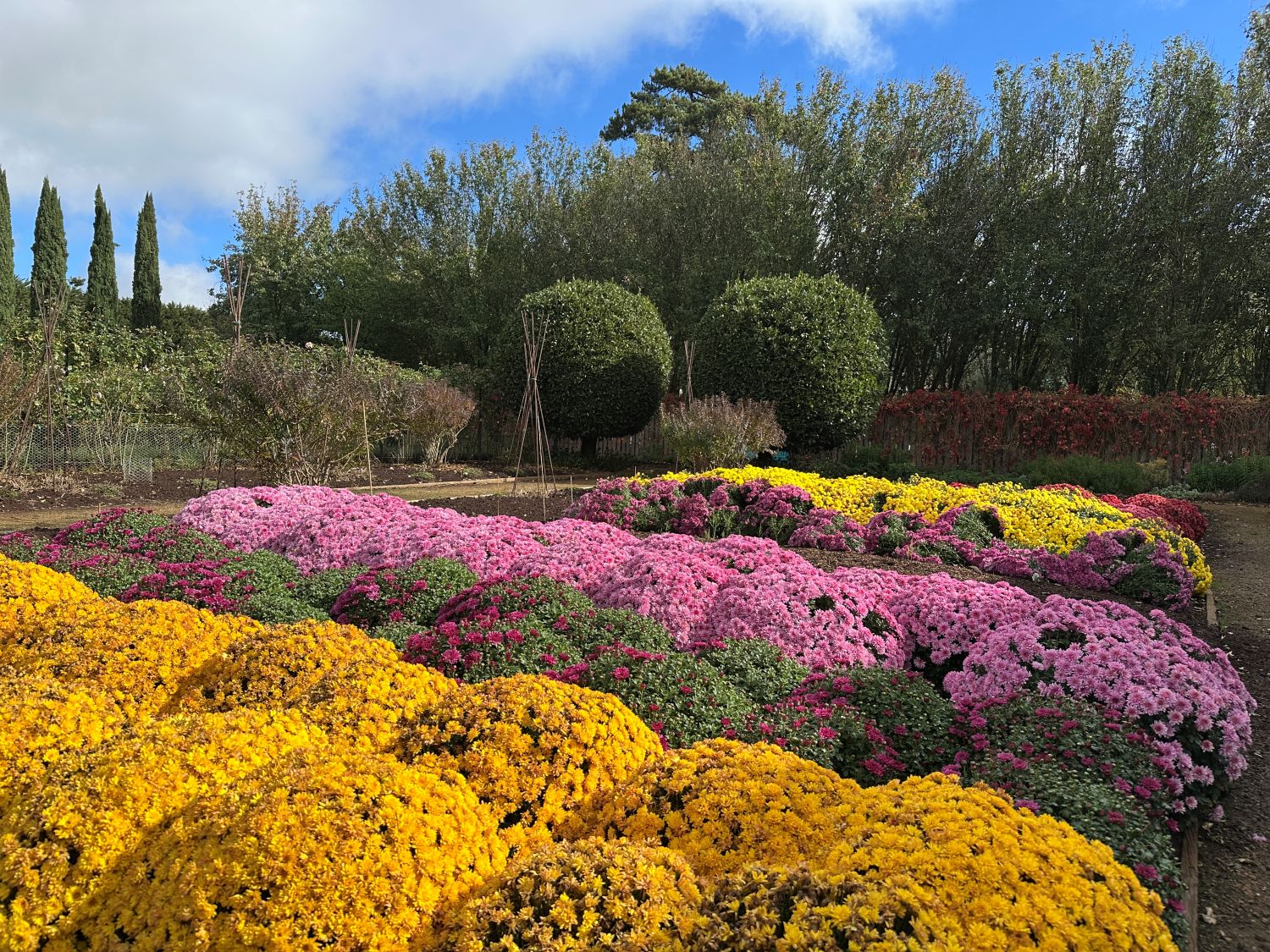
Chrysanthemums at Lambley